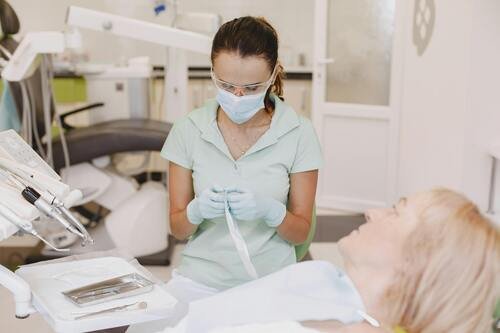
For generations, the mere mention of a dental appointment was enough to send a shiver down the spine of even the bravest individual. Cultural tropes and movies have long depicted the dental office as a place of endurance—a sterile, cold environment filled with intimidating sounds and the distinct, medicinal scent of eugenol. This collective anxiety was often rooted in reality, as historical dentistry focused primarily on utility and survival, often at the expense of patient experience. However, a quiet revolution has taken place over the last two decades. We have moved from the era of “maintenance” to the era of “comfort,” a paradigm shift that places the patient’s physical and emotional well-being at the very center of the clinical process.
For generations, the mere mention of a dental appointment was enough to send a shiver down the spine of even the bravest individual. Cultural tropes and movies have long depicted the dental office as a place of endurance—a sterile, cold environment filled with intimidating sounds and the distinct, medicinal scent of eugenol. This collective anxiety was often rooted in reality, as historical dentistry focused primarily on utility and survival, often at the expense of patient experience. However, a quiet revolution has taken place over the last two decades. We have moved from the era of “maintenance” to the era of “comfort,” a paradigm shift that places the patient’s physical and emotional well-being at the very center of the clinical process.
Today, walking into a modern dental practice feels less like entering a medical clinic and more like visiting a wellness center. This transformation is not accidental; it is the result of converging advancements in technology, pharmacology, and psychology. The goal is no longer just to fix a tooth; it is to ensure that the person attached to that tooth feels safe, respected, and surprisingly relaxed. By deconstructing the sources of dental fear—pain, noise, loss of control, and invasion of space—modern dentistry has rewritten the script on what it means to care for a smile.
The End of the “Needle Phobia”
Perhaps the most significant barrier to dental care has always been the fear of the injection. The anticipation of that sharp pinch is often worse than the procedure itself. However, the science of anesthesia has made quantum leaps forward. In the past, the discomfort of an injection was often caused by the acidity of the anesthetic fluid entering the tissue, rather than the needle itself. Modern dentistry has solved this chemistry equation.
Today, we utilize buffering systems that neutralize the pH of the anesthetic before it enters the body. When the solution matches the body’s natural pH, the “sting” is virtually eliminated. Furthermore, the application of high-strength topical gels—essentially numbing the surface skin before any instrument touches it—means that the initial contact is often imperceptible. We also have computer-controlled delivery systems. These devices look like small pens rather than syringes and regulate the flow of the anesthetic so slowly and smoothly that the tissue does not feel the pressure of the fluid. The result is a numbing process that is profound, rapid, and, for many patients, entirely pain-free. It turns the most feared moment of the appointment into a non-event.
The Digital Impression Revolution
If you ask patients over the age of thirty what they disliked most about the dentist as a child, many will recall the “goop.” Taking impressions for crowns or braces used to involve filling a large metal tray with a cold, putty-like material that tasted like chalk and triggered a strong gag reflex. Patients had to sit motionless for minutes, breathing through their noses and praying the material wouldn’t slide down their throats.
Those days are rapidly disappearing thanks to intraoral scanners. This technology has replaced the physical tray with a sleek, handheld wand. The dentist simply waves the wand over your teeth, and it captures thousands of images per second, stitching them together to create a flawless, 3D color model of your mouth on a screen in real-time. There is no mess, no gagging, and no waiting for materials to set. The scan is instantaneous and incredibly precise. This not only improves comfort during the visit but also results in restorations that fit better, requiring fewer adjustments and less time in the chair. It is a cleaner, faster, and infinitely more pleasant way to map the architecture of your smile.
The sound of Silence and Distraction
The high-pitched whine of the dental drill is a sound frequency that seems designed to trigger a primal “flight” response. It is a noise that cuts through noise-canceling headphones and settles deep in the nerves. Recognizing this, manufacturers have re-engineered the motors that power dental instruments. We have moved from air-driven turbines, which produce that characteristic shriek, to electric handpieces. Electric motors are smoother, quieter, and more consistent. They produce a low hum rather than a high whine, significantly reducing the acoustic stress of the appointment.
Beyond the tools themselves, the environment is curated to distract and soothe. We understand that the brain can only focus on so many stimuli at once. By providing ceiling-mounted televisions, noise-cancelling headphones playing spa music, or even virtual reality headsets, we engage your senses in something positive. This “distraction therapy” is a powerful tool. When your eyes are watching a nature documentary and your ears are filled with calming melodies, your brain processes less of the clinical environment. You are technically in the dental chair, but your mind is hiking a trail or listening to a symphony, effectively decoupling the experience from the anxiety.
Minimally Invasive Dentistry
One of the greatest contributors to discomfort is the trauma inflicted on the tooth and surrounding tissue during a procedure. In the past, dentists often had to remove a significant amount of healthy tooth structure just to secure a filling or a crown. Today, we practice biomimetic and minimally invasive dentistry. This philosophy focuses on preserving as much natural biology as possible.
Advanced bonding materials allow us to adhere restorations directly to the tooth without the need for aggressive cutting or “retention grooves.” We also use air abrasion—a technique that uses a stream of air and tiny particles to gently spray away decay—and dental lasers. Lasers are particularly revolutionary; they can vaporize decay and contour gum tissue with light energy, often without the need for any anesthesia at all. Because there is no vibration and no heat, the nerve of the tooth remains calm. This approach not only makes the procedure itself comfortable but also drastically reduces post-operative sensitivity. You heal faster because there is less to heal from.
The Psychology of Control
Finally, comfort is a state of mind. Much of dental anxiety stems from a feeling of helplessness—lying back with your mouth open, unable to speak, while someone works in your personal space. Modern dentistry prioritizes patient empowerment. We establish clear communication signals before we even begin. A simple raise of the hand is a universal “stop” button. Knowing that you have the power to pause the procedure at any moment, for any reason, fundamentally changes the dynamic.
We also invest time in “co-diagnosis.” Using intraoral cameras, we show you exactly what we see on a large monitor. We explain the condition, discuss the options, and let you drive the decision-making process. When you understand what is happening and why, the fear of the unknown dissipates. The relationship shifts from a doctor doing something to you, to a partner doing something with you. This psychological comfort—the feeling of being heard, respected, and in control—is perhaps the most important innovation of all.
Conclusion
The dental clinic visit of the past—a test of endurance and stoicism—is a relic of history. Today, a trip to the dentist is defined by precision, gentleness, and a deep respect for the human experience. Through the convergence of silent tools, digital magic, chemical buffering, and compassionate psychology, we have created an environment where health does not have to hurt.
If you have been avoiding the dentist due to memories of discomfort from years ago, you owe it to yourself to experience the difference. Modern dentistry is not just about fixing teeth; it is about providing a sanctuary where you can care for your health without compromising your peace of mind. It is a new day for your smile, and it is more comfortable than you ever imagined.